Streamlining Temp Worker Onboarding for YoungCapital Germany
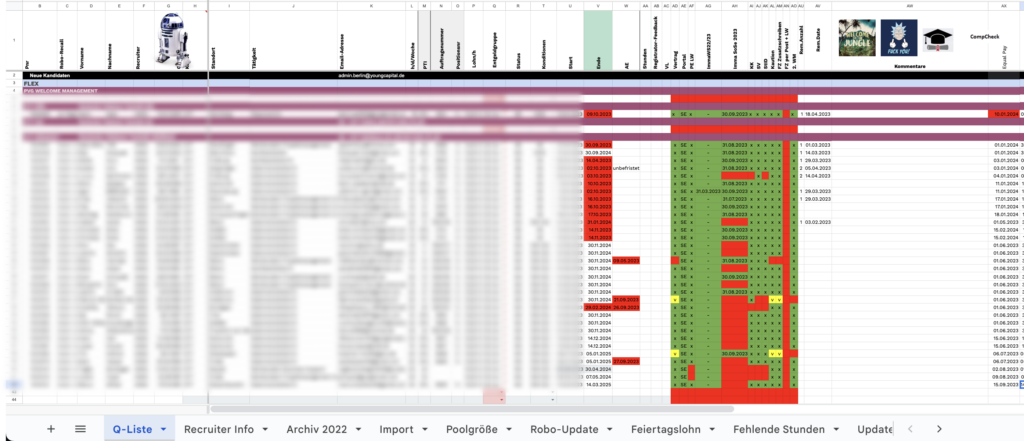
YoungCapital Germany was struggling with their temp worker onboarding process, which was primarily managed through a complex and extensive Google Sheet. This process was very manual, time-consuming and prone to errors, which mostly affected the recruiters’ efficiency and caused compliance risks. Therefore, it was decided that the Google Sheet needed to make place for a streamlined system for the onboarding process.
Goal: Create a product that simplifies the onboarding process for recruiters and HR employees and improves the onboarding experience for the temp workers that meets all necessary compliance needs.
Stakeholders: Recruiters, Temp workers, HR, Legal, IT
My responsibility: In this project I was the UX designer. Together with the Product owner I did user research to understand the current workflows, pain points and needs. I translated this into user flows, wireframes and UI designs for the new application.
Approach
Analysis of the current process, pains and needs
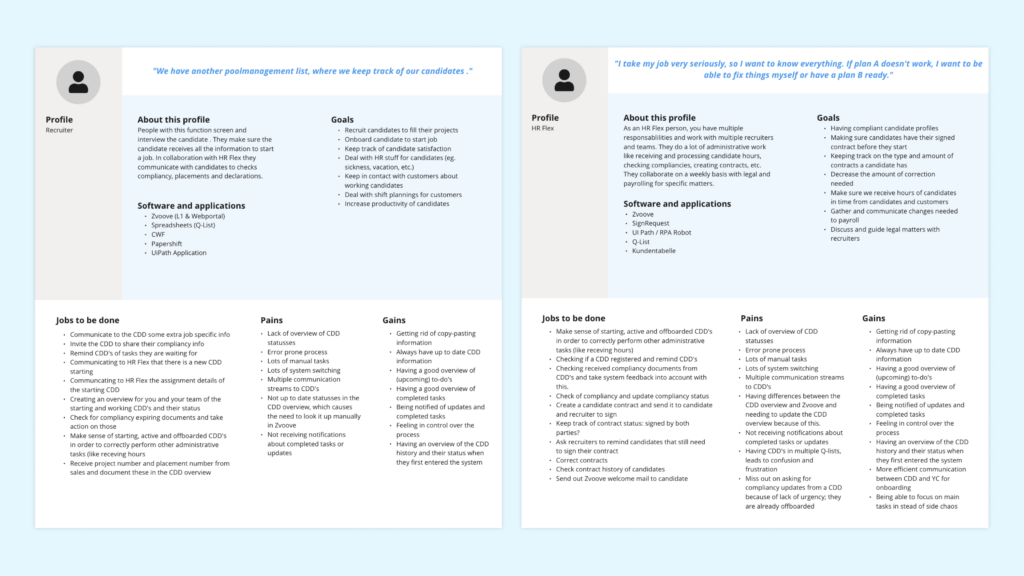
Together with the Product owner, I conducted user interviews with Recruiters, HR and Legal to get to the root of the current process, pains and needs. These interviews were summarized in personas.
Mapping the future process
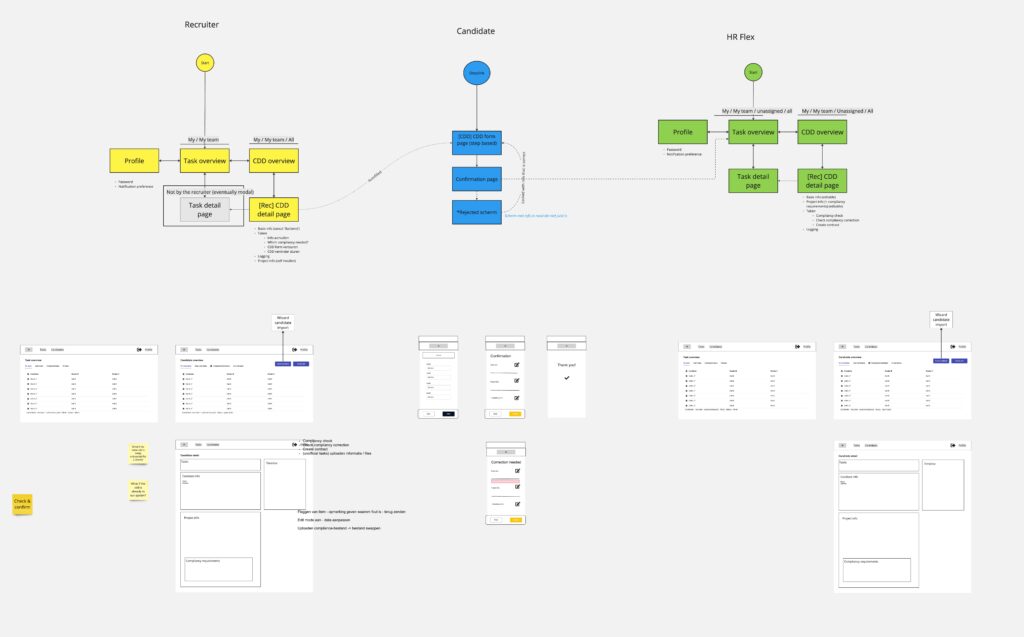
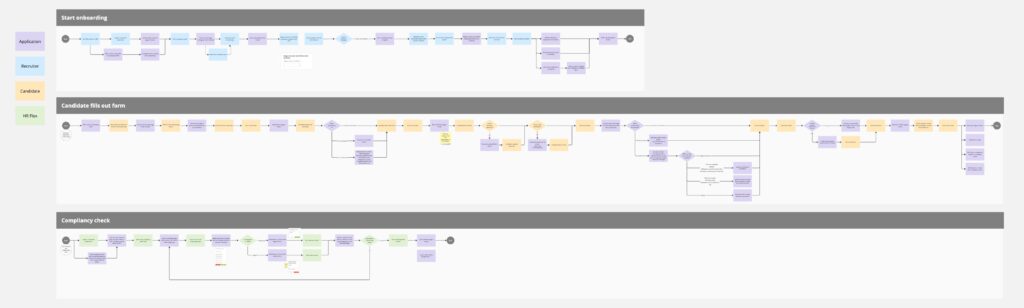
Based on the gathered requirements, we decided that the product consists of 3 main flows: Recruiter starting up the onboarding, Temp worker filling out their worker details and HR checking the compliancy.
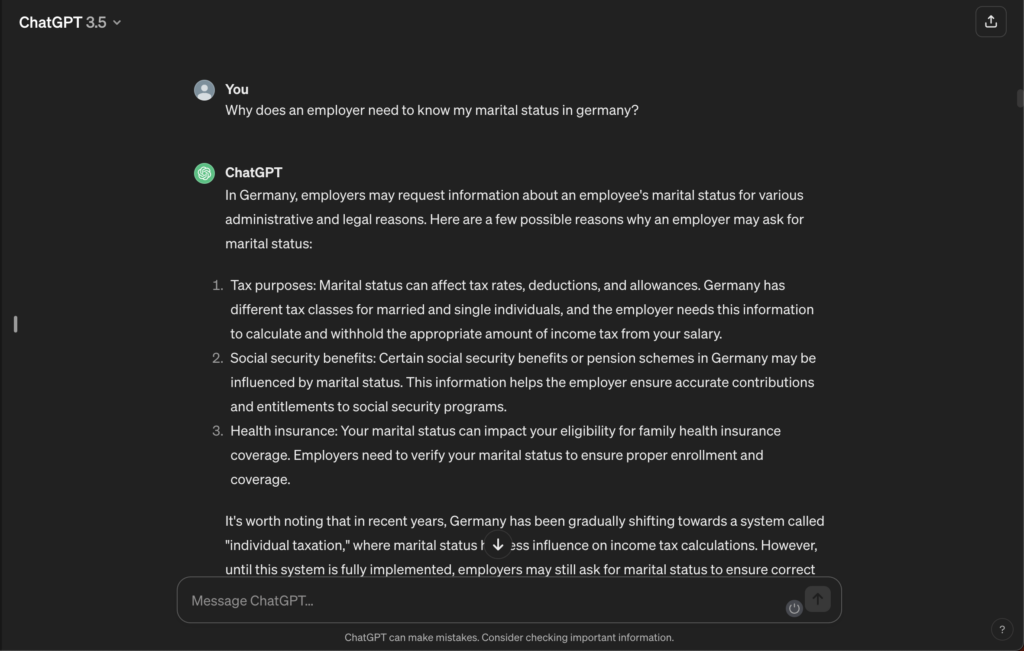
Gaining a deeper understanding of German HR laws and regulations
Zooming in on the process the requirements for each flow were gathered and mapped. For this, I needed a deeper understanding of the German laws and regulations. For this, I made great use of ChatGPT with an extra check of the Legal department. The Legal department provided a chaotic long list of compliance requirements. By opening the discussion and challenging the list, we were able to shorten this list by 25% and categorize it into 5 categories. Which directly impacted the workload and experience of the temp workers and HR employees.
Mapping out user flows & Wireframing
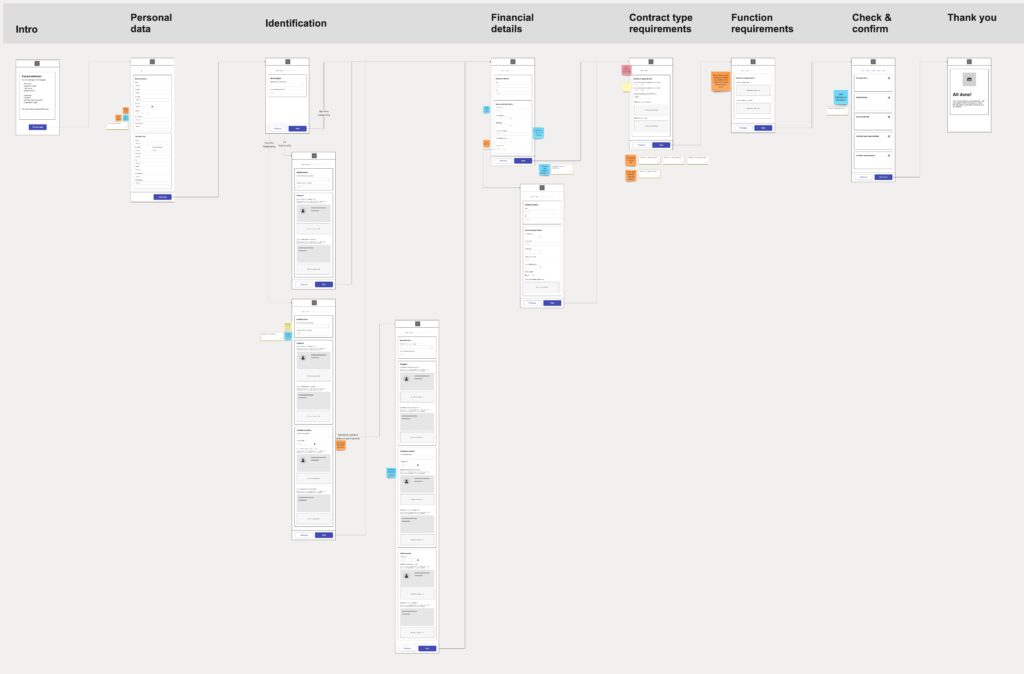
Equipped with fresh knowledge and a good view on the product requirements, I created the first user flows and wireframes. These were thoroughly discussed with stakeholders and refined based on their input.
Translating wireframes into UI designs
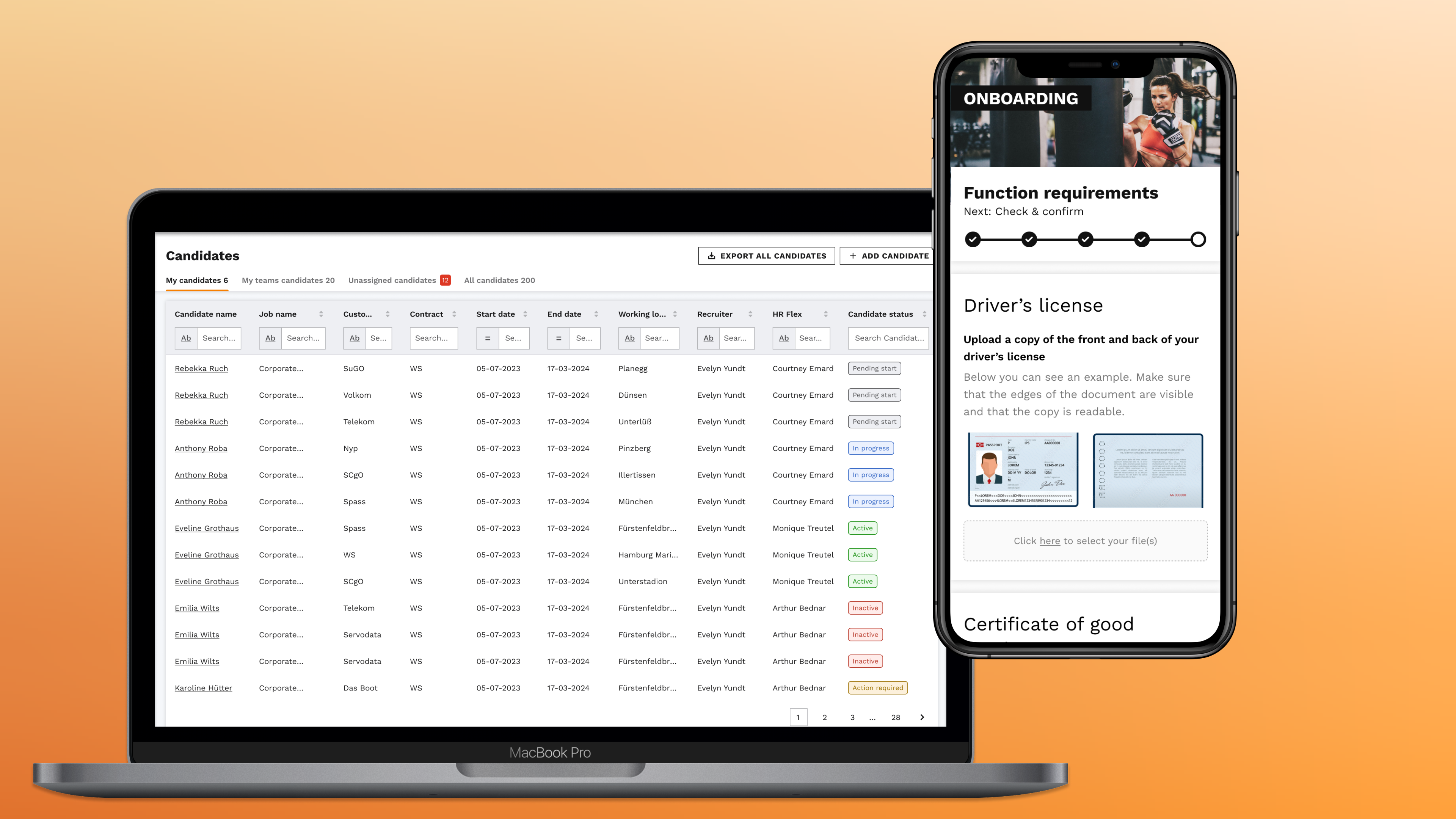
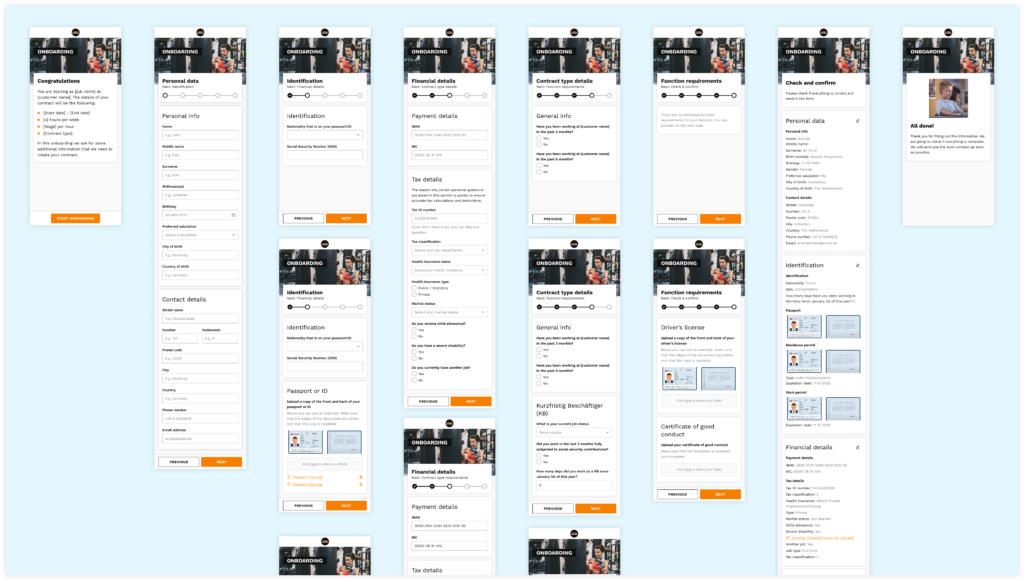
Moving from the wireframes to the final UI designs took multiple iterations. The product was developed with low code in Mendix Studio Pro, which requires close collaboration between UX and development to optimize both processes. During this process, some components needed to be added to the design system as well.
Testing, implementation and iteration
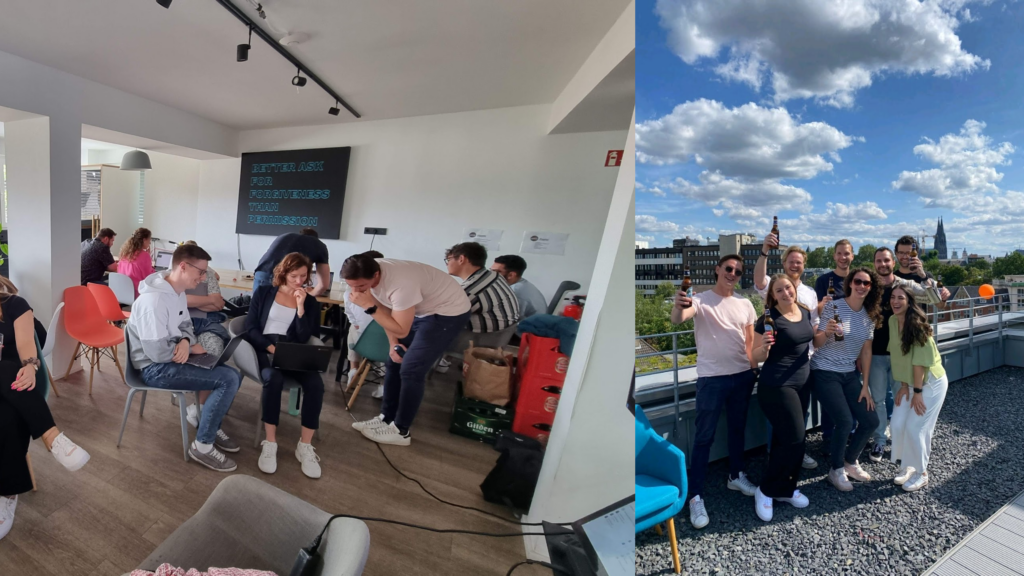
The product was gradually rolled out per team. With the first pilot team we organized an extensive workshop to guide the process of moving from the complicated yet beloved Google Sheet to the newly designed system. It was valuable to observe the first experiences, gather feedback and figure out the next steps for improving the product.
Conclusion & Learnings
The newly designed onboarding tool significantly improved the experience for recruiters and HR employees, making it easier for them to work together in a streamlined partially automated process. This drastically decreased the amount of manual administrative tasks. Along the way I learned that close collaboration with stakeholders can bring together seemingly contradicting requirements into a solid process. In this case these were the strict Legal compliance requirements contradicting the need for a fast and easy onboarding process from Recruiters and Temp workers. What I also learned is that ChatGPT is your best friend in understanding a complex legal context all written in a different language.